 Easiest stretches
Class II
Novice water
- Channels
- Wide and clear
- Swimmers
- Seldom injured
- Skill
- Trained paddlers
Guides
Language
EnglishCurrency
US dollar · $Your currency applies on GetYourGuide too.
Guide · Safety
Rafting carries real risk, and the size of it depends on the water. Here is how the river grades describe the Ayung near Ubud, when it gets harder, and what you can check before and on the day.
Editorial team, rafting-ubud.comUpdated October 24, 20267-minute read31 sources
In brief
Is rafting dangerous? Any activity on fast water carries risk, and no operator can remove it. What changes the size of that risk is the river itself, and white water has a scale for exactly that. Indonesia Travel, the Ministry of Tourism's site, notes that the International Scale of River Difficulty has six grades.5 Wikipedia adds that the scale is neither linear nor fixed.6
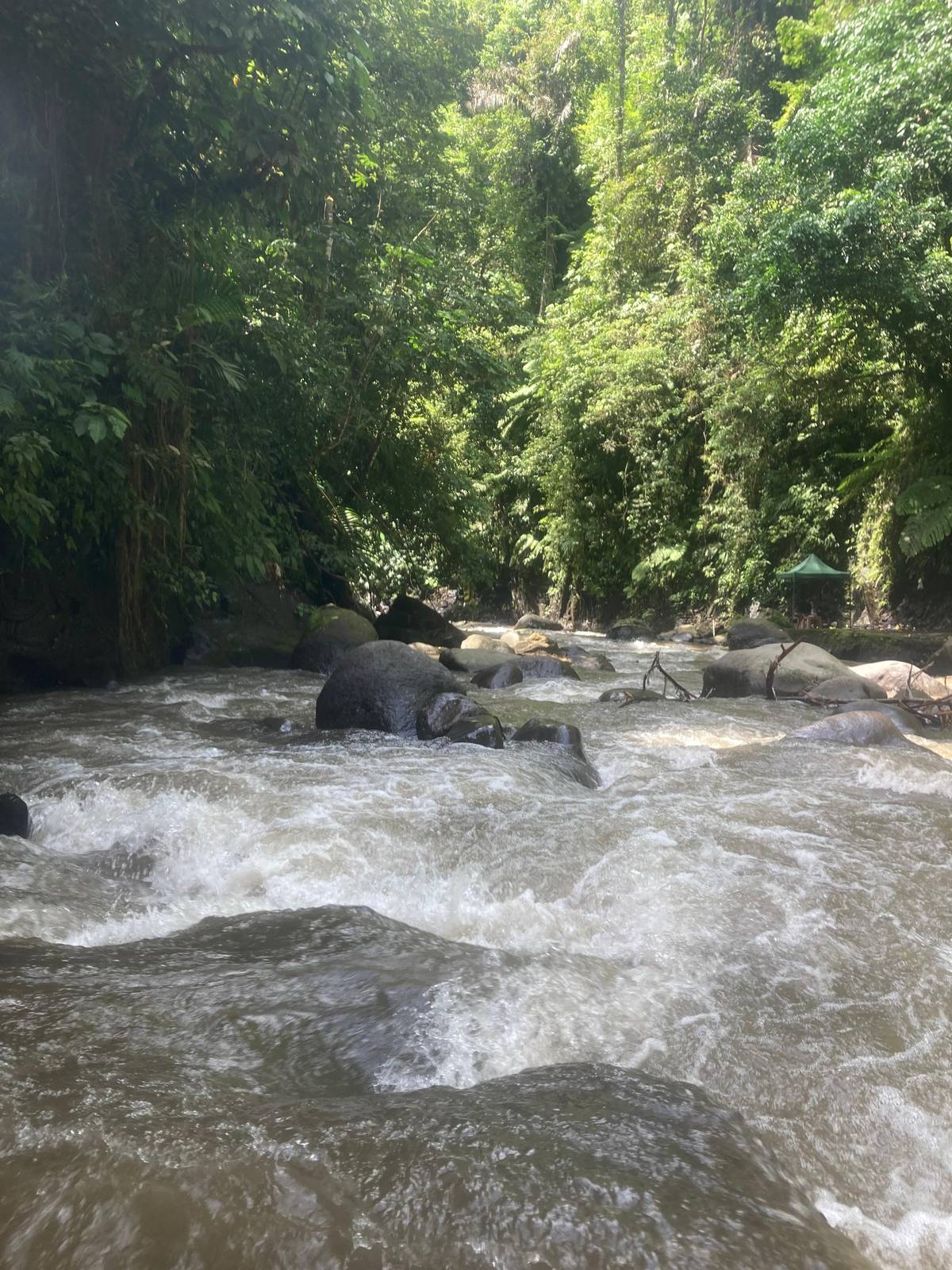
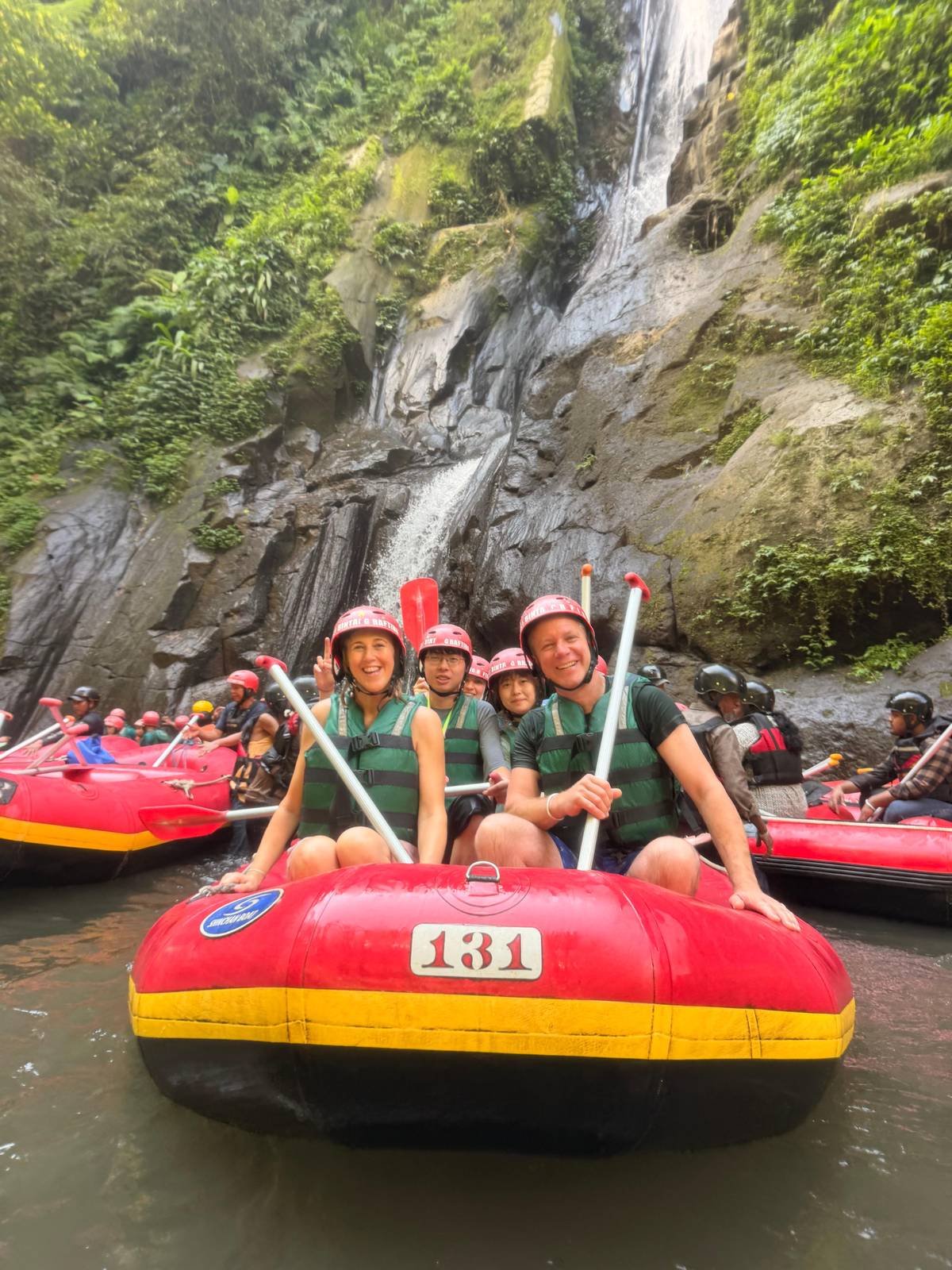
For the Ayung, the river most Ubud trips run, the same ministry page gives a clear reading. In the dry season it classes the river as II and III: some rough water, some rocks, small drops, but no considerable danger.1 It adds that basic paddling, with some rafting experience, is enough for the journey at that level.7
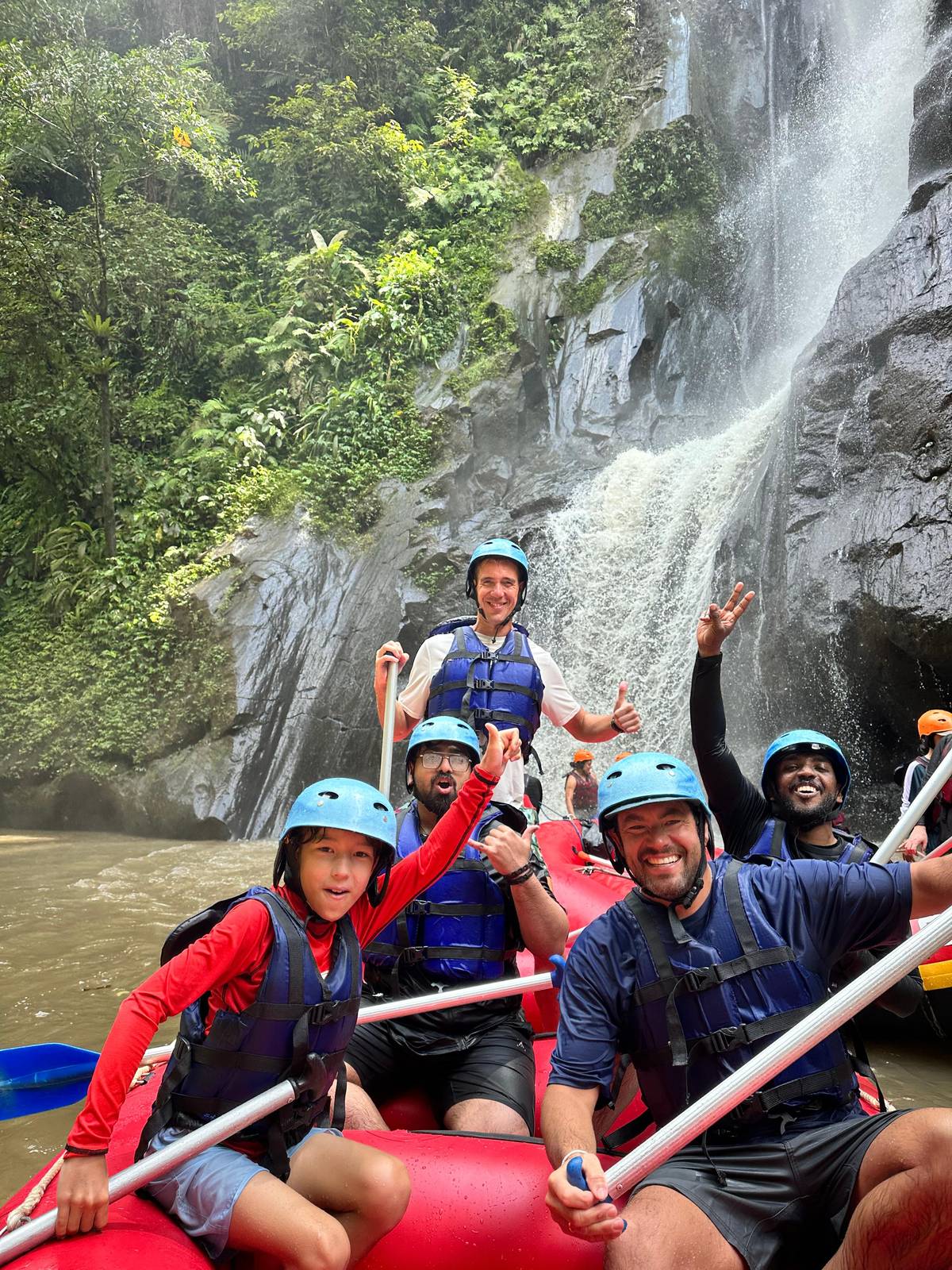
The picture changes after heavy rain. In the rainy season, when the water rises, the ministry classes the Ayung as IV, with medium-large waves and better skills needed for the sharp bends.2 The listing for the trip this site books says the same in its own words: class 2 rapids that sometimes rise to class 4 in the rainy season. So the fair answer is a question back: which month are you going, and how much did it rain this week? Is Ayung River rafting safe on a calm dry-season morning, for a fit adult who follows the guide? The ministry's grading points to a manageable risk, not a negligible one.
Before the first rapid
At the base
A safety briefing, then a helmet and a life jacket for each rafter.
Fitting
Helmets and life jackets fully adjusted before the talk.8
The talk
A short training on basic manoeuvres before you launch.9
The talk
Smile, hold your paddle, swim back to the raft.4
On the river
Paddling well keeps you out of the water in the first place.10
The scale was created by American Whitewater to rate rivers anywhere in the world, and its wording is practical.11 Class II is described as straightforward rapids with wide, clear channels; rocks and medium waves are easily avoided by trained paddlers, and swimmers are seldom injured.12
Class III brings moderate, irregular waves that can be hard to avoid and can swamp an open canoe.13 For someone who ends up in the water, injuries are rare and self-rescue is usually easy, though group help may be needed to avoid a long swim.3 This is the level a raft full of first-timers meets on the Ayung in the drier months.
Class IV is a different animal: intense, powerful but predictable rapids that need precise boat handling in turbulent water.14 Wikipedia's summary of the scale puts the risk of injury to swimmers at moderate to high, and notes that self-rescue may be difficult.15 If your trip falls in a wet week, that is the level the guides are reading on the river, and their decisions about where you paddle and where you walk deserve full attention.
The river grades
| Class | Name | The water | If you swim |
|---|---|---|---|
| I | Easy | Riffles and small waves | Slight risk, easy self-rescue |
| II | Novice | Wide, clear channels | Swimmers seldom injured |
| III | Intermediate | Irregular waves, hard to avoid | Injuries rare, help may be needed |
| IV | Advanced | Intense but predictable | Moderate to high injury risk |
| V | Expert | Long, violent rapids | Swims are dangerous |
| VI | Extreme | Rarely attempted | Rescue may be impossible |
Classes as summarised from American Whitewater's scale; the Ayung sits at II and III in dry months and IV in the rainy season.1612315171812
Three levels of water
Easiest stretchesNovice water
 Dry-season Ayung
Intermediate water
 Rainy-season Ayung
Advanced water
Decision helper
Find your situation and read the answer
The Ayung is classed IV when the water rises, and plans can change for safety.2
The trip this site books and other Ayung listings exclude pregnancy.
Heart problems and back problems appear on the listings' not-suitable lists.
One base gives 300 steps down and 400 up after the rafting.
Classified as class II and III in the dry the season, means that the Ayung has some rough water, some rocks, small drops, but poses no considerable danger.
The grade of a river may change with the level of flow, and Wikipedia notes that it usually does.19 High water usually makes rapids harder and more dangerous, although some rapids get easier when the rocks that form them are covered.20 At flood stage even rapids that are normally easy can hide lethal and unpredictable hazards.21
Operators on the Ayung plan around this in different ways. One listing warns that heavy rain may affect river conditions and that the plan can change for safety. Another offers an alternative day when the weather is bad. A third says it runs in all weather conditions and asks you to dress for it.
That variety is worth reading before you book in the wet months. A trip that runs in any weather is not necessarily unsafe, and a postponed trip is not a failure; both are choices the operator makes about the river on the day. What you can do is pick a listing whose policy you are comfortable with, keep a spare morning in your plans, and accept a guide's decision to wait.
Checklist
Video
The video loads only when you tap play.
Every listing has a not-suitable list, and it is the most useful paragraph on the page. The trip this site books rules out children under 5, pregnant women, people with heart problems, people over 65 and people with a low level of fitness. It also asks for good physical condition because of the steps to the river.
Other operators draw the line in similar places. The Bali Bintang run rules out pregnancy and back problems. The premium Ayung trip is not recommended for people with heart conditions. Bali Bintang's base-camp trip excludes pregnancy and serious medical conditions.
Indonesia Travel warns that operators set their own terms on age limits and safety rules, and that they may not match.22 If you have a back, heart or joint condition, or you are not sure, write to the operator before you book and describe it plainly. A guide who knows in advance can seat you well, and an honest no at the booking stage is far better than a surprise at the top of the stairs.
On the Ayung, Indonesia Travel describes each raft as carrying safety gear, with a short skills training on basic manoeuvres and an experienced guide on board.9 One listing names what that means at its base: a safety briefing, then a helmet and a life jacket, with a guide of over 5 years' experience.
If you want something firmer than a listing's word, ask about certification. The International Rafting Federation, the world governing body for rafting, runs the Guide Training and Education system, which it calls the only globally recognised raft-guide certification.2324 An award is valid for three years, and only when backed by a current first-aid certificate from a course of at least eight hours that includes CPR.2526
The federation also accredits operators, through self-evaluation against published standards, a peer review and a site visit by a trained assessor.27 The listings compared on this site do not mention either, so treat a yes as a bonus. A clear answer about guide training, first aid and how the operator handles high water tells you a lot about the base before you arrive.
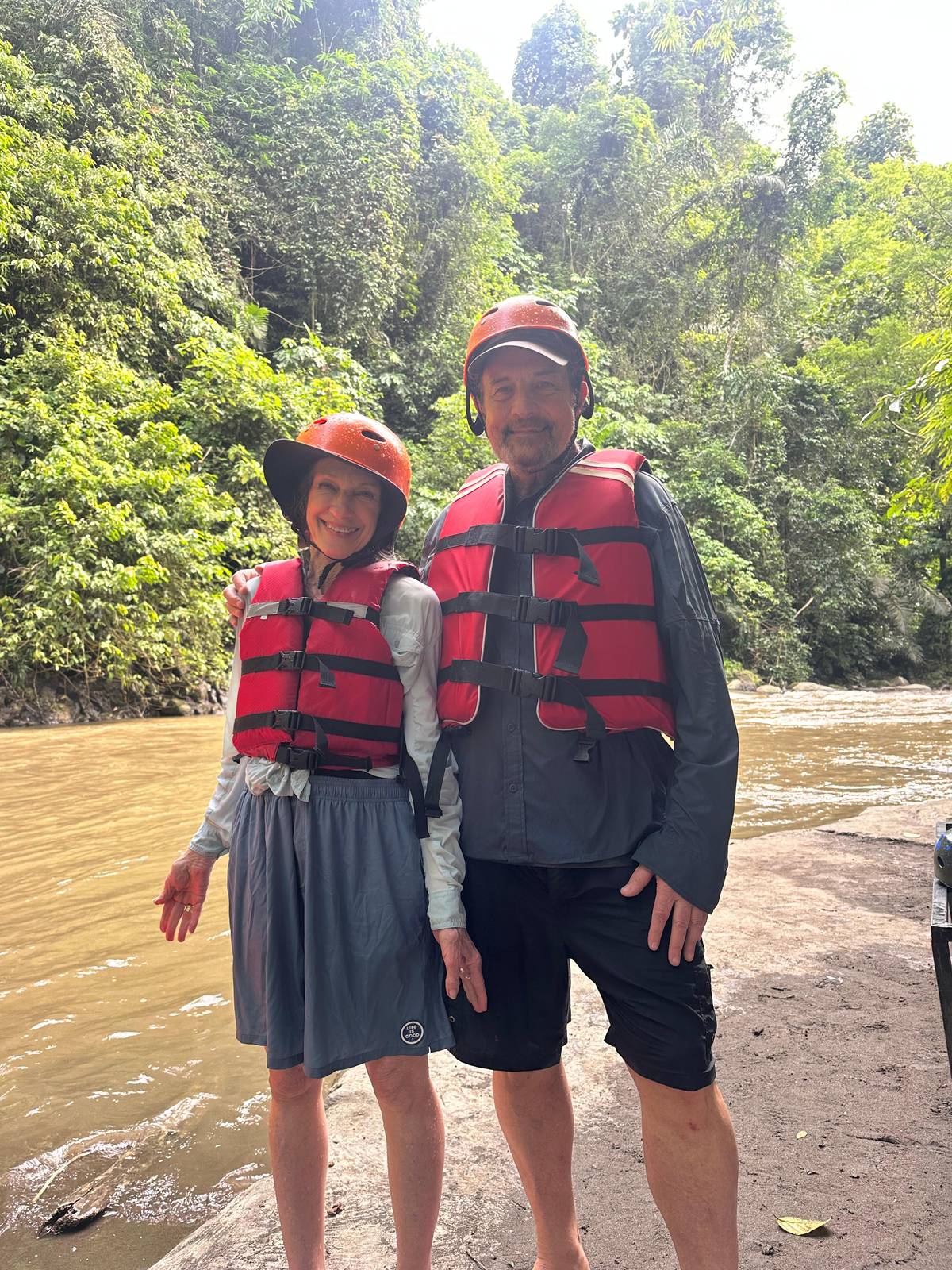
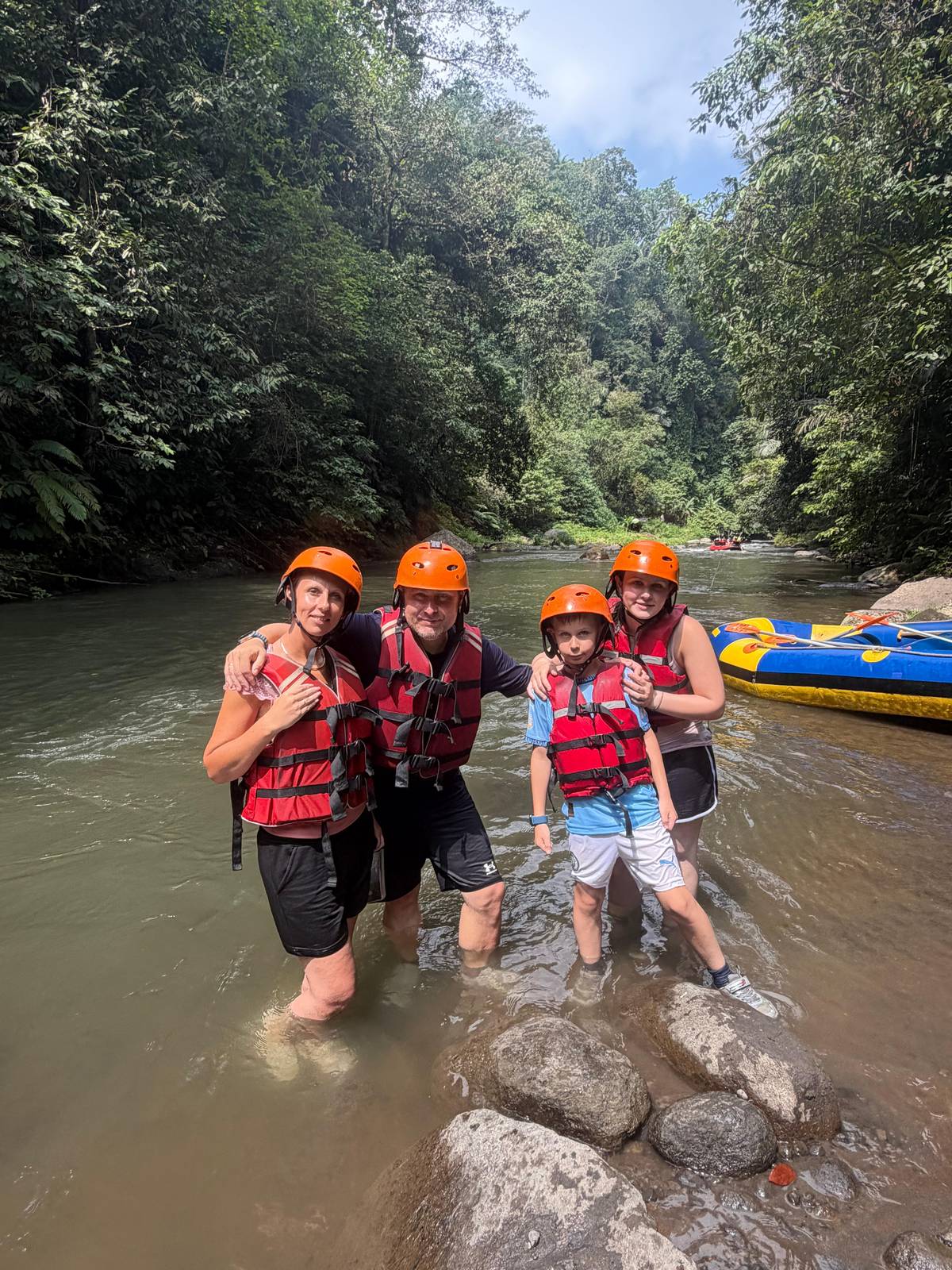
Before the first rapid there is a briefing, and it is not a formality. An IRF guide instructor, writing for the federation, advises that every helmet and life jacket be fully adjusted before the talk starts.8 A loose jacket can ride up when you are in the water; the U.S. Coast Guard says a correctly worn foam jacket fits snugly and does not rise above the chin or ears.28
The same instructor lists what a good talk covers, including what to do if you fall out: smile, hold your paddle, swim back.4 It also covers the whitewater swimming position, in which you look around and stay active in your own rescue rather than waiting.29 Listen to how your guide wants you to hold the paddle and where to put your feet, and ask if anything is unclear.
The best protection is paddling well. The instructor's point is simple: rafters who paddle when told stay out of situations where they would end up swimming.10 Follow the calls from the back of the boat, keep your feet wedged in, and hold the T-grip of your paddle so it does not swing into a neighbour's face. The river does most of the work; your job is to stay in the raft.
The hardest part of the morning may not be a rapid at all. One listing from the Toekad base gives 300 steps down to the river and 400 up after the rafting. The trip this site books asks for water shoes on that walk. Wet steps and flip-flops are a poor pair, so wear something that straps on.
Is white water rafting safe in Bali for someone who rarely exercises? Choose with care. Climbing out of a gorge after a morning in the sun is real work in tropical heat, and the not-suitable lists mention low fitness for a reason. Drink the water the base provides, rest at the landings, and take the climb at your own pace rather than the group's.
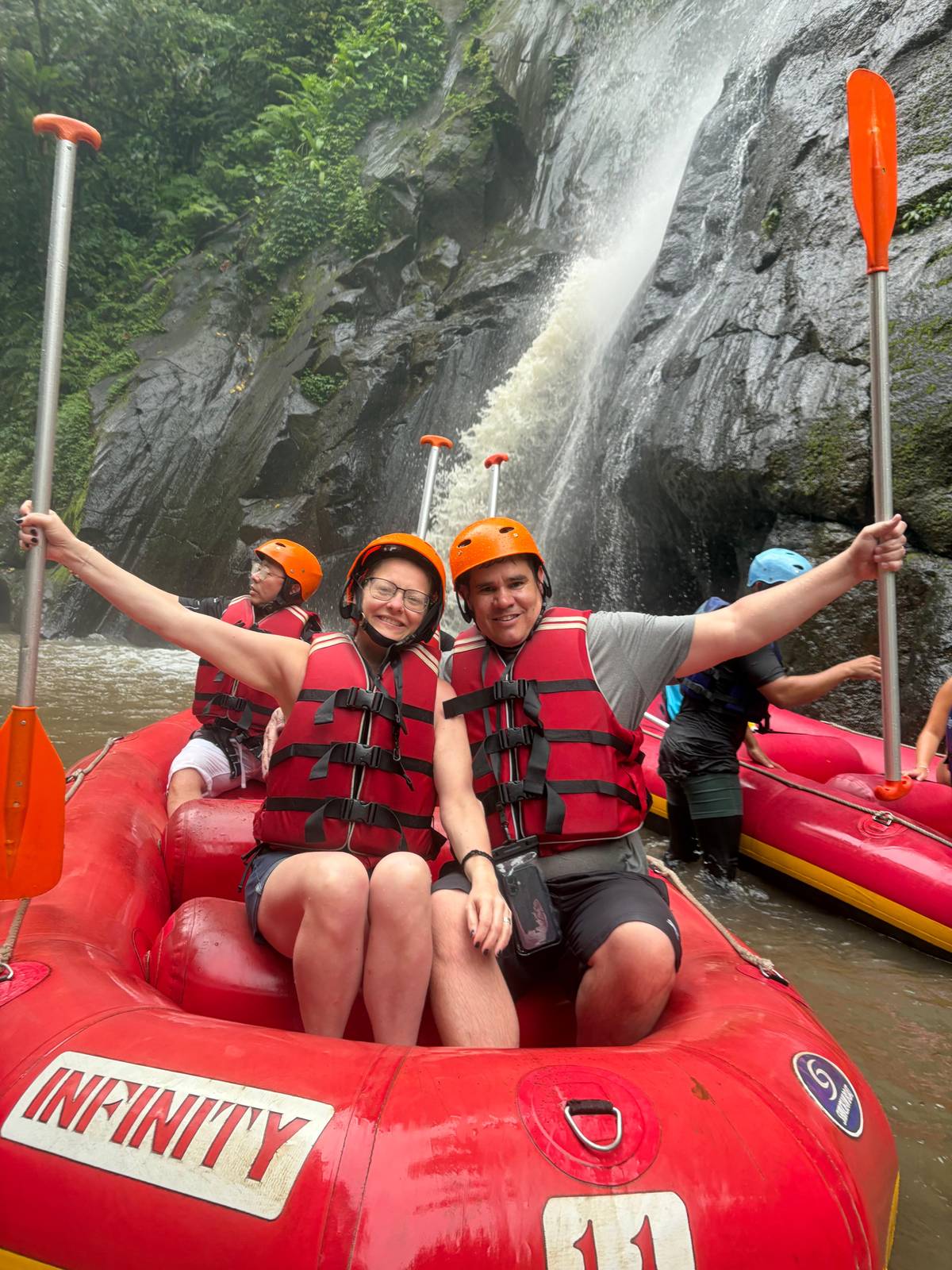
Then there is the river bank itself. Trips may pause at waterfalls or calm pools, and some guides pull over for photos when the water allows.30 Rocks there are slippery and the current can be stronger than it looks, so keep your helmet and life jacket on until your guide says otherwise.
Your morning
Choose a time between 9 AM and 1 PM, add pickup if you like, and cancel free up to 24 hours before.
Manageable in the dry season. Indonesia Travel classes it II and III then, with no considerable danger and basic paddling enough.17
Yes, it is classed IV then. When the water rises, the ministry gives medium-large waves and sharper bends that need better skills.2
Check the not-suitable list. This site's trip excludes children under 5, pregnant women, heart problems, over-65s and low fitness.
Follow the safety talk. An IRF instructor's version: smile, hold your paddle, swim back, and stay active in your own rescue.429
Ask the operator. The IRF's Guide Training and Education award is the globally recognised one; it lasts three years with first aid.2425
A jacket rated for white water. The U.S. Coast Guard approves Type V devices for restricted uses such as commercial white-water rafting.31
It depends on the operator. One Ayung listing offers another day in bad weather; another says it runs in all weather.
Sources
Keep reading